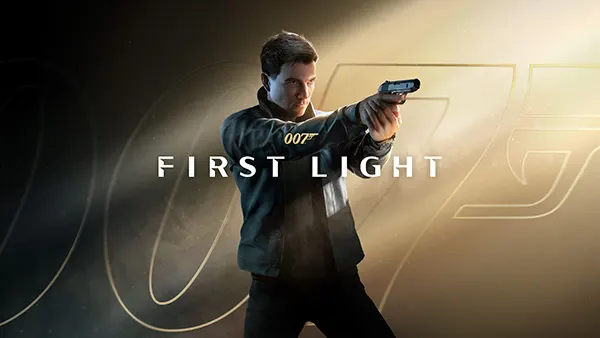
007 First Light After Release: Did IO Interactive Successfully Bring the Hitman Formula to James Bond?
007 First Light arrived on 27 May 2026 with unusually high expectations. IO Interactive had spent years building its reputation around Hitman: World of Assassination, a series defined by intricate locations, social stealth, alternative routes and the freedom to solve problems in unexpected ways. Giving the same studio James Bond therefore looked like an almost obvious match, but the finished game takes a more complicated route. First Light is not Hitman with Bond replacing Agent 47. It is a story-led third-person action adventure that borrows selected parts of IO Interactive’s established design while giving substantially more space to scripted action, dialogue, gadgets, car sequences and cinematic spectacle. The result has been received strongly overall. By 19 August 2026, Metacritic listed a score of 87 based on 94 critic reviews and a user score of 8.3 based on 2,249 ratings. Those numbers reflect a broad consensus: IO Interactive has produced a convincing modern Bond game, although its strongest moments are not always the ones that resemble Hitman most closely.
How Much of Hitman’s Formula Survived the Move to James Bond?
The clearest connection between the two series appears whenever First Light gives Bond a location, an objective and enough room to work out his own route. Some missions take place around crowded social events, heavily guarded buildings and restricted areas where simply walking towards the objective is not an option. Bond can listen to conversations, identify people with useful access, locate alternative entrances, create distractions and use information gathered in the environment. A guarded door may be bypassed through a staff area, a conversation may reveal where an access pass has been left, and an apparently decorative part of a building may turn out to provide another route inside. These situations immediately recall Hitman’s Mission Stories and environmental clues. The important difference is scale. First Light usually presents a smaller number of meaningful choices and then guides those choices back towards a required story event. There is freedom, but it operates inside a much more clearly defined narrative route.
Social stealth has also survived, although it has been modified to fit Bond’s personality. Agent 47 traditionally relies on anonymity: he steals clothes, adopts temporary identities and tries to become part of the background. Bond is almost the opposite. He attracts attention, talks his way through awkward situations and often survives because he can improvise faster than the person confronting him. First Light turns that difference into an actual mechanic. When Bond is caught somewhere he should not be, detection does not always trigger an immediate firefight. In suitable situations he can bluff, provide an excuse or manipulate the conversation long enough to recover. This gives failure in stealth a useful middle state. The player has not remained perfectly hidden, but the mission has not yet collapsed into open combat either. It is one of the smartest ways in which IO Interactive has adapted a familiar idea instead of simply copying it.
The structure of the locations shows the same philosophy. Hitman is built around large self-contained spaces that can often be replayed dozens of times before all their interactions become familiar. First Light uses some of the same environmental thinking, but its locations are designed to keep Bond moving towards the next story beat. A social area may lead into restricted corridors, stealth may develop into a chase, and a carefully controlled infiltration can suddenly become a large action sequence. This means the player has less authority over the overall shape of a mission. IO Interactive was open about that choice before release: the developers wanted specific dramatic events to happen at specific moments rather than building every chapter as an enormous open sandbox. After release, that design decision is easy to recognise. It sacrifices some of Hitman’s extreme replayability, but it also allows First Light to maintain the pacing expected from a James Bond adventure.
Where the Hitman DNA Works Best
First Light is most convincing when several small systems overlap and the game does not insist on a single solution. A useful example is the way information functions inside social spaces. Conversations are not present only to add atmosphere. Listening to the right person can reveal a route, an identity or a weakness in security. One route may require obtaining credentials, another may depend on reaching a window or service area, while a third can involve a social interaction that puts Bond close to his objective without raising suspicion. None of these choices reaches the almost absurd number of possibilities found in the largest Hitman maps, but they produce the same satisfaction: the player notices something, understands why it matters and then turns that information into an advantage. That sequence of observation, planning and execution remains one of IO Interactive’s strongest design skills.
Gadgets give these situations a distinctly Bond-like character. Q-Branch equipment includes tools for interfering with electronics, incapacitating enemies and creating temporary openings in guarded areas. The game generally treats gadgets as practical parts of a mission rather than as one-use references to the films. A device carried into the field may support stealth during one encounter and become useful during combat later. Players can prepare a small selection before missions, so there is at least some reason to consider the kind of approach they expect to use. This is another area where the Hitman philosophy survives without feeling copied. Agent 47 arrives with lockpicks, poisons, explosives and other specialised equipment; Bond arrives with technology designed by Q. The basic idea of preparation remains familiar, but the fantasy attached to it belongs specifically to 007.
Replay-oriented TacSim content makes the relationship with Hitman even clearer. Tactical Simulation turns completed environments and combat systems into scored challenges with modifiers, progression and unlockable equipment. IO Interactive expanded this side of the game after release rather than treating it as a minor extra. Update 1.1.0, issued on 24 July, introduced two additional three-tier TacSim Escalations, The Workshop and Extraction Avenues, alongside new weapons and an outfit that can be acquired through progression. This is important because the main campaign is deliberately more controlled than Hitman. TacSim gives players another place to test systems, improve routes and repeat scenarios under altered conditions. It does not make First Light as open-ended as World of Assassination, but it provides a more natural home for the experimentation associated with IO Interactive’s previous work.
Where 007 First Light Deliberately Stops Being Hitman
The largest difference is that Bond is expected to survive when subtlety fails. In Hitman, an uncontrolled gunfight often feels like evidence that a carefully planned operation has gone wrong. First Light treats escalation as part of the intended rhythm. A mission can begin with conversation and quiet infiltration before turning into close combat, gunfire or a large scripted escape. That shift is fundamental to the game’s identity. Bond is not an assassin whose ideal operation leaves almost no trace; he is an action hero who can remain discreet until events make discretion impossible. First Light therefore needs shooting and hand-to-hand fighting to carry far more weight than they do in modern Hitman. The transition also allows a player who makes a mistake during stealth to continue rather than immediately loading an earlier save. For a Bond game, that flexibility usually feels appropriate, even when it reduces the pressure associated with remaining completely unseen.
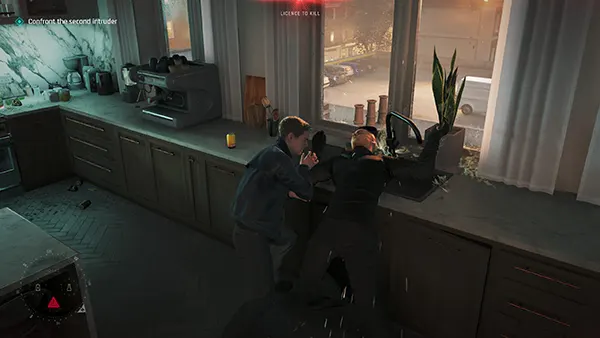
Hand-to-hand combat is particularly important because it expresses Bond’s physicality in a way that Agent 47’s brief takedowns do not. Bond can use nearby objects, surfaces and environmental opportunities during fights, producing sequences that feel less like formal arenas and more like untidy brawls. The intention is easy to understand: this is a younger Bond, still developing discipline and frequently solving immediate problems through speed and aggression. Reviews differed on how successfully the combat achieves that aim. VGC praised the action and considered it a major strength, while PC Gamer found some movement, cover behaviour and contextual actions awkward. Both reactions can be true at once. Fights are energetic and often visually convincing, but they do not always have the same mechanical precision that IO Interactive achieved after years of refining Hitman’s stealth systems.
The more heavily scripted sequences create an even sharper division. Car chases, collapsing structures, large gunfights and other set pieces give First Light the rhythm of a cinematic action game rather than an assassination sandbox. These scenes reduce player choice because their purpose is not to ask how a problem should be solved; their purpose is to make the player perform Bond’s next dangerous escape. The Verge highlighted the variety and spectacle of the campaign, while PC Gamer argued that the mixture of linear action and simplified Hitman-style spaces sometimes leaves neither side enough room to reach its full potential. That disagreement gets to the centre of First Light. The game works best for players willing to accept that IO Interactive has used Hitman as one ingredient rather than as the complete blueprint. Anyone expecting every chapter to function like Sapienza, Paris or Berlin is likely to find the campaign more restrictive than anticipated.
Combat, Gadgets and Patrick Gibson’s Younger Bond
The decision to tell an origin story helps justify many of these differences. First Light follows a 26-year-old James Bond who begins as a talented but reckless Royal Navy air crewman before entering MI6’s revived 00 programme. This is not the perfectly composed operative normally introduced at the start of a Bond film. He is capable, arrogant and quick-thinking, but the story allows him to make mistakes and clash with more experienced people around him. Patrick Gibson’s performance is central to making that approach credible. Rather than reproducing Sean Connery, Pierce Brosnan or Daniel Craig, he presents a version that can plausibly develop towards the familiar Bond image while still having a personality of his own. His delivery also supports one of the game’s key mechanics: bluffing would be much less convincing if Bond himself did not sound comfortable inventing an explanation under pressure.
The supporting cast gives the origin story enough structure to function independently from the films. Priyanga Burford plays M, Lennie James portrays Bond’s mentor John Greenway, Alastair Mackenzie appears as Q, and Kiera Lester plays Miss Moneypenny. Gemma Chan and Lenny Kravitz are also part of the larger cast. These familiar roles and new characters allow IO Interactive to build an MI6 that feels inhabited rather than using headquarters only as a menu between missions. The Q sections are especially useful because they place gadgets inside character interactions and reinforce the idea that Bond is still entering a professional culture with its own rules. The official theme, written by Lana Del Rey and long-time Bond composer David Arnold, performs a similar function for the game’s identity. First Light regularly references the history of 007, but it is not tied to the continuity or appearance of one film actor.
This independent interpretation also explains why the game can move between different tones. There are scenes built around controlled infiltration, others around physical violence, and others that lean strongly into the theatrical side of Bond. IO Interactive does not try to make every part behave according to one strict stealth rule set. In practice, that flexibility produces both the game’s strongest quality and its main inconsistency. When the transitions are smooth, First Light feels unusually varied: observation leads to improvisation, improvisation to confrontation, and confrontation to spectacle. When the transitions are less polished, the player can feel as though two different design traditions have been connected rather than fully combined. The overall effect is still recognisably Bond. More importantly, it gives the game a reason to exist beside Hitman instead of merely offering a licensed variation of something IO Interactive had already perfected.
What 007 First Light Looks Like After Its 2026 Launch
The critical response indicates that the experiment worked for most reviewers. As of 19 August 2026, Metacritic records a Metascore of 87 and classifies the reception as generally favourable, with 94 per cent of the listed critic reviews in its positive category. The user score of 8.3 points in the same broad direction. Individual reviews, however, show why a single average cannot fully describe the game. VGC awarded it 5/5 and argued that IO Interactive had successfully translated the Bond fantasy rather than producing a Hitman reskin. PC Gamer scored it 65 and praised the Bond story while criticising the combination of familiar linear action and reduced sandbox complexity. The Verge was much more enthusiastic about the variety of missions and large-scale spectacle but still identified problems with checkpointing and loading. The disagreement is useful because the same design choices sit behind both the praise and the criticism.
The launch build was not free from technical problems either. IO Interactive issued several hotfixes during the first weeks and followed them with the much larger 1.1.0 update on 24 July. According to the studio, that update addressed more than 200 reported issues, ranging from crashes and animation faults to achievement problems, controller behaviour and mission-specific bugs. It also added the two TacSim Escalations and several progression rewards. The size of the patch does not mean every player encountered serious problems, but it does show that the launch version required a meaningful amount of post-release work. By August, First Light had therefore become a more mature release than the version assessed during the earliest review period. IO Interactive has also stated that further improvements and content updates remain in development, making the current game a starting point rather than a completely static package.
Commercially, the game also started strongly. IO Interactive reported in June that First Light had sold more than 2.7 million copies during its first week and announced a Year One content plan covering additional story missions, locations and regular TacSim material. The studio has mentioned more weapons, gadgets, enemies, challenges and gameplay scenarios for Tactical Simulation, while New Game+ is being considered as another way to increase campaign replayability. As of 19 August, the Nintendo Switch 2 edition was still being described by IO Interactive as a later summer 2026 release rather than part of the original May launch on PlayStation 5, Xbox Series X|S and PC. The long-term value of the Year One plan will depend on the quality of those additions, but the early support already shows that IO Interactive intends to develop First Light beyond its initial campaign.
Did IO Interactive Actually Succeed with the Hitman-to-Bond Transition?
Yes, but success came from knowing which parts of Hitman to keep and which parts to leave behind. First Light retains IO Interactive’s interest in layered spaces, environmental information, alternative entrances, social manipulation and equipment that changes how a situation can be approached. It also understands the pleasure of entering a guarded location with incomplete information and gradually learning how the place works. Those qualities give the game’s quieter missions an identity that very few conventional third-person action games possess. At the same time, First Light reduces the size and systemic complexity of its open areas because it wants to control pacing, character development and spectacle more closely. For players who regard unlimited sandbox freedom as the defining feature of Hitman, that trade-off can feel substantial. For a Bond story, however, it provides room for events that would be difficult to guarantee inside a completely open simulation.
The weaker parts mostly appear where IO Interactive moves furthest from its established strengths. Driving is functional rather than exceptional, some combat interactions can become untidy, and the linear sequences occasionally lack the precision of studios that have specialised in cinematic action for several generations. The artificial intelligence can also behave inconsistently, particularly when stealth changes abruptly into combat. Those problems keep First Light from feeling as mechanically refined as Hitman: World of Assassination at its peak. Yet comparing the two games only by asking which has deeper stealth misses what First Light is trying to achieve. Bond needs conversation, improvisation, gadgets, hand-to-hand fighting, vehicles, large set pieces and a continuing personal story. IO Interactive’s real task was therefore not to reproduce Hitman, but to build a broader structure in which its existing strengths could support all those other elements.
Seen from that perspective, 007 First Light is a successful adaptation rather than a direct transfer. It proves that IO Interactive’s approach to mission design can work with James Bond, but it also demonstrates why Bond cannot simply behave like Agent 47. The strongest sections give players enough information and freedom to feel clever without allowing the campaign to lose its dramatic direction. The less convincing sections show where the studio still has room to improve if First Light becomes the beginning of a longer series. With strong review averages, substantial early sales, an active update programme and additional Year One content already planned, the project has established a credible foundation. Most importantly, it has given Bond a modern game identity that stands beside Hitman rather than underneath it. IO Interactive transferred the principles that suited 007, changed the ones that did not, and produced something recognisably connected to its previous work without making the two games interchangeable.